Episode 199
Listen to the Episode
Listen once for the main idea. Then use the transcript and repeat useful sentences aloud.
Download and study
Episode Resources
Download a file or continue to the transcript.
Best order: listen once, read while listening, then listen again without the text.
Full lesson
Read the Transcript
Follow the text while you listen, then repeat useful sentences aloud.
Hi, everybody! I am Georgiana, your English teacher and founder of SpeakEnglishPodcast.com. My mission is to help you speak English fluently.
Do you play a musical instrument? Well, today we will learn some benefits of playing a musical instrument and whether it will also help you with learning English.
And with a mini-story, you will improve your fluency. I will tell you a story while asking many questions that you will need to answer as quickly as possible. It's like having a conversation with another person in English.
Ok, let's start.
#1 You'll be smarter
One of the great reasons to learn to play music is to increase your cognitive ability. In other words, to be smarter. Playing music is a way to activate your brain in a way that helps you with memory retention, and you can learn new things quickly.
#2 Improves your memory
Like I just said, playing an instrument improves your memory. So learning to play an instrument can be very beneficial for those not so young, those with memory problems.
If you never know where you leave your keys, it may be a good idea to stimulate your brain by learning to play a musical instrument.
Because learning to play music involves learning a lot of new things, your brain will become more accustomed to learning, which will make a big difference to your memory in the future.
#3 You'll have better concentration
Improving your musical skills forces you to use all the parts of your brain involved in concentration, making you more capable of focusing on other life situations.
#4 It builds your confidence
Do you want to feel more confident? If you can play an instrument well, it will make you feel more self-confident. Feeling comfortable playing music in front of others is essential and will extend to other aspects of your life. For example, if you get nervous about public speaking, playing an instrument in front of a crowd can be a big help.
#5 You'll feel proud
And not only will you feel more confident, but you will also feel proud of yourself. Because mastering a musical instrument can make you feel an enormous sense of accomplishment, this will have a substantial positive impact on your life, and you will feel happier.
#6 Improves our mood
Playing an instrument can help with stress, and depression because it acts as an outlet for difficult emotions.
It can be a way to calm down in difficult situations and a healthy distraction on a stressful day.
In short, playing an instrument has all kinds of positive benefits on our mood.
#7 It makes you creative
And one of the most obvious benefits of learning a musical instrument is creativity. Being creative is essential for many aspects of life, and you can extend this idea to other areas, such as art, writing, or cooking.
And finally, learning to play a musical instrument can also help you…
#8 Learn a foreign language.
When we learn to play an instrument, we also develop our listening skills. And it has been proven that students with musical training pronounce the sounds of a second language better and pick up the relevant contrasts between the sounds of that new language.
On the other hand, although I'm fluent in several languages, I must confess that I haven’t yet had the opportunity to play any musical instrument. However, I intend to learn to play the piano because it's my favorite musical instrument.
How about you? Do you know how to play an instrument? Leave me a comment on my website or social media. I would like to know if it has helped you in your English learning.
Ok! Now it’s time for you to practice your speech with a mini-story.
Now, let’s practice.
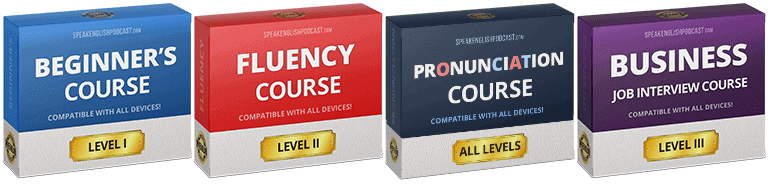
Continue practicing with my complete English courses. Choose the course that fits your level and goals, and learn to speak more naturally and confidently.
IMPROVE YOUR SPEAKING
Mini-Story: Speaking Practice
Answer the questions aloud with short and quick responses. Repeat the Mini-Story several times to improve your speaking and listening.
What's a mini-story?
A mini-story is very simple. I give you information using phrases, and then I ask you questions.
After each question, there will be some seconds of silence: it's your turn to answer the question!
Just try to give an easy and short answer. Not a complex one.
After your answer, I'll give you the correct answer.
And just like that, I'll tell a story with questions and answers.
Are you ready?
A group of five friends decide to play a musical instrument.
Are they friends or family?
Friends. They are friends.
How many friends decide to learn to play an instrument?
Five. All five friends decide to learn to play an instrument.
What do all five friends decide to learn?
All five friends decide to learn to play a musical instrument.
They set themselves a challenge: Each friend will learn to play a musical instrument in one year and then form a band.
Do they decide to do nothing for a year?
No. No. They decide to play a musical instrument.
What will each friend learn?
They decide to play a musical instrument.
How long will they have to learn?
For one year. They will have to learn how to play a musical instrument for a year.
What will they do at the end of the year?
Form a band. They will form a band at the end of the year.
So each friend spends 5 hours a day learning to play an instrument from scratch.
Does each friend spend 5 hours a week learning?
No. No. Each friend spends 5 hours a day learning to play an instrument. Not five hours a week.
How much time do they spend learning?
Five hours a day. They spend five hours a day learning to play an instrument.
What do they learn from scratch?
They are learning to play an instrument.
Do they already know how to play the instrument?
No. No. They are learning to play the instrument from scratch.
After a year, they meet, but they are all surprised.
Do they meet after six months to see how the progress is going?
No. No. They don't meet after six months. They meet after one year.
Are they all surprised?
Yes. They are all surprised.
What happened when they met?
When they met after one year, they were all surprised.
It turns out they all learned to play the same instrument: the trombone.
Did they all learn to play different instruments?
No. No. They all learned to play the same musical instrument.
What instrument did they learn to play? The piano?
No. No. They didn't learn to play the piano. They learned to play the trombone.
So they couldn't form a band, but at least they developed creativity, confidence, patience, and cognitive ability.
Were they able to form a trombone-only band?
No. No. They were not able to form a band.
Did they develop creativity?
Yes. They developed creativity.
What about confidence?
Yes. They also developed confidence.
What two other things did they develop?
Patience and cognitive ability. They also developed patience and cognitive ability while learning to play a musical instrument.
Thanks for listening, and I’ll see you in the next episode.
Review
Vocabulary
Review the most useful words and expressions before listening again.
musical instrument
an object used to produce music.
cognitive ability
the mental capacity to learn and think.
memory retention
the ability to keep information in your memory.
concentration
the ability to focus attention.
self-confidence
belief in your own abilities.
creativity
the ability to produce new ideas.
listening skills
the ability to understand spoken sounds and language.
pick up a contrast
notice a difference between sounds.
Continue practicing with my complete English courses. Choose the course that fits your level and goals, and learn to speak more naturally and confidently.