
Episode 258
Listen to the Episode
Listen once for the main idea. Then use the transcript and repeat useful sentences aloud.
Download and study
Episode Resources
Download a file or continue to the transcript.
Best order: listen once, read while listening, then listen again without the text.
Full lesson
Read the Transcript
Follow the text while you listen, then repeat useful sentences aloud.
Hi! I'm Georgiana. Thanks for joining me for another episode of the podcast. My mission is to help you improve your fluency.
Remember that you can get the text of this episode on my website SpeakEnglishPodcast.com
Ok! Let's start!
We will explore opinion genres, where writing is done from a subjective perspective. This perspective can be the author's or the media's opinion. Let's see what they are.
#1 Editorial
Imagine a newspaper reporting on an event and publishing various news articles, reports, and maybe interviews.
This newspaper may publish an "editorial," which expresses the newspaper's opinion or position on the topic covered in the news. It usually reflects the media's ideological stance. An editorial generally doesn't mention the author and is not too long. Typically, it can be found on the first few pages.
#2 Opinion Article
An opinion article is a text that presents the viewpoint of a specific person, like a journalist, politician, or public figure. These articles don't necessarily align with the media's editorial stance. Ideally, diverse media outlets would have different opinion articles, enriching the content and allowing readers to compare different perspectives.
#3 Column
Yes, a column supports buildings, but in journalism, columns are something different, of course 🙂 They are similar to opinion articles but are usually shorter.
Additionally, these have specific authors who write regularly, and usually focus on topics like politics, sports, or lifestyle. The term "column" comes from arranging narrow vertical sections in old newspapers to save space on printed pages.
#4 Letter to the Editor
This is a common section in many newspapers and magazines where readers can send letters with their opinions, comments, and suggestions about the published articles and topics.
The letter to the editor is a way for people to share their thoughts with the newspaper's editors.
Many times, these letters are written about a specific article in the newspaper or a topic that is currently important to the reader.
I think this practice is becoming less popular because social media has changed how readers share their opinions on news and current topics.
However, this part is still important for people who like to send their comments privately or directly to the newspaper's editors instead of posting them on social media. Some individuals don't use social media, so writing letters to the editor can be their only way to communicate.
Now, let’s practice.
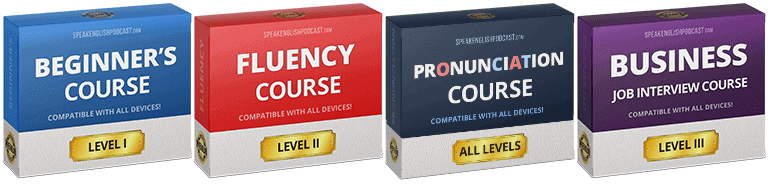
Continue practicing with my complete English courses. Choose the course that fits your level and goals, and learn to speak more naturally and confidently.
IMPROVE YOUR SPEAKING
Mini-Story: Speaking Practice
Answer the questions aloud with short and quick responses. Repeat the Mini-Story several times to improve your speaking and listening.
Grace, your dream was to become an excellent journalist.
Was your dream to become someone smart?
No, my dream wasn't to become someone smart. I already was! I was, and am, very smart. I wanted to become an excellent journalist.
What did you want to become?
An excellent journalist. That's what I wanted. To be an excellent journalist.
After studying journalism, you got a job at a newspaper.
Did you get a job in the media?
Yes, I got a job in the media. At a newspaper.
Did you get the job before or after studying journalism?
After. After studying journalism at university.
Where did you get a job?
At a newspaper. I got a job at a newspaper.
Your boss wanted you to be more sensationalist, but you left because you disagreed.
Did you leave because your boss wanted you to be more subjective?
No. I didn't leave because of that. My boss wanted me to be more sensationalist.
Did you agree to be more sensationalist?
No, I disagreed. I didn't agree to be more sensationalist.
Did you leave or stay in the job?
I left. I left the new job.
Why did you leave the job?
Because I disagreed with being more sensationalist.
You started a blog of objective news, but only your mother and four friends read it.
Did you start a blog of sensationalist news?
No, no. I didn't start a blog like that. I started a blog on objective news.
Did a lot of people read it?
No, not a lot of people read it: only my mother and my four friends.
How many people read it? Three, four, or five?
Five. Only five people read it: my mother and my four friends.
To increase blog visits, you started publishing absurd news.
Did you start publishing discreet, objective, and boring news?
No, no. I didn't do that. I started publishing absurd news.
Why did you start publishing that kind of news?
To increase blog visits.
What increased?
Blog visits.
Finally, you managed to have the most-read blog in the world.
Did you have the most-read blog in the world at the beginning?
No, no. Not at the beginning.
What did you achieve?
Having the most-read blog in the world.
Was the blog the most or least read in the world?
The most read in the world, of course. As I told you, I'm very smart. I would eventually have something unique and surprising. I'm the best.
Wow... Humility is not your strong suit, right?
You're right; I'm a bit proud. But... I'm very smart!
Great! Grace got what she wanted. She managed to get everyone to read her blog.
Thanks for listening, and I’ll see you in the next episode.
Review
Vocabulary
Review the most useful words and expressions before listening again.
editorial
an article expressing an opinion, often from a publication.
column
a regular article by the same writer.
review
an evaluation of a book, film, product, or performance.
feature article
a detailed article exploring a subject in depth.
blog post
an article published on a website or blog.
press release
an official statement provided to the media.
reporter
a person who gathers and presents news.
go viral
spread very quickly online.
Continue practicing with my complete English courses. Choose the course that fits your level and goals, and learn to speak more naturally and confidently.

0 Comments