Episode 347
Listen to the Episode
Listen once for the main idea. Then use the transcript and repeat useful sentences aloud.
Download and study
Episode Resources
Download a file or continue to the transcript.
Best order: listen once, read while listening, then listen again without the text.
Full lesson
Read the Transcript
Follow the text while you listen, then repeat useful sentences aloud.
Hi! I’m Georgiana, and I’m so happy to be back with a new episode of the Speak English Now podcast—the podcast that helps you speak English fluently, with no grammar and no textbooks.
Today, I want to talk to you about something really simple—but very important.
Be patient with yourself.
This episode has three short parts:
Why learning takes time
How to stop being too hard on yourself
A small mindset shift that can help you feel better
You can take the quiz to find out your English level.
It’s quick, fun, and helpful!
Let’s get started!
⏳ Part 1: Learning Takes Time
Let me share a little secret with you… When I started learning Spanish, it wasn’t easy at all.
Even though I now speak several languages, I remember how difficult it was at the beginning. I felt nervous, I made many mistakes, and I didn’t feel confident. And one thing was especially hard for me: speaking.
Even if I understood what people were saying, it was still difficult to speak. Speaking is always the hardest part when learning a language. And guess what? I still make mistakes sometimes—and that’s okay.
Many of you want fast results. You want to speak English perfectly in one month.
You want to feel confident right away.
But the truth is—real learning takes time.
It takes practice. It takes repetition. And it takes patience.
You don’t need to understand everything today.
You don’t have to speak perfectly right now.
Give yourself time.
You’re doing better than you think.
And remember—this is not a race. It’s a journey.
🧠 Part 2: Don’t Be Too Hard on Yourself
I’ve worked with so many students who felt bad about their progress.
And I understand. I’ve felt that way too.
Sometimes, we expect too much from ourselves. We think:
“I should be better by now.”
“Why am I still struggling?”
But these thoughts don’t help. They make us feel tired and frustrated.
Here’s something I’ve learned:
You don’t need to be perfect.
You don’t need to compare yourself to others.
And you don’t have to say yes to everything.
It’s okay to say:
“I need a break.”
“I’m learning.”
“I’ll try again tomorrow.”
Even saying "no" can be part of self-care.
When you respect your limits, you take care of your energy.
💡 Part 3: A New Way to Talk to Yourself
Think about how you talk to a good friend.
You’re probably kind. You say things like:
“It’s okay.”
“You’re doing your best.”
Now think about how you talk to yourself.
Sometimes we say things like:
“I’m not good enough.”
“I always mess up.”
Would you say those things to your best friend? No.
Try changing the voice in your head. Say:
“I’m doing my best.”
“I’m improving.”
“This is part of the process.”
Small changes like these can make a big difference.
😊 Final Thoughts
You don’t have to rush. You don’t have to be perfect. You don’t have to feel strong every single day.
Just be patient with your English.
Be patient with your progress.
And most of all—be patient with yourself.
I’ve been there too. You’re not alone.
Now, let’s practice.
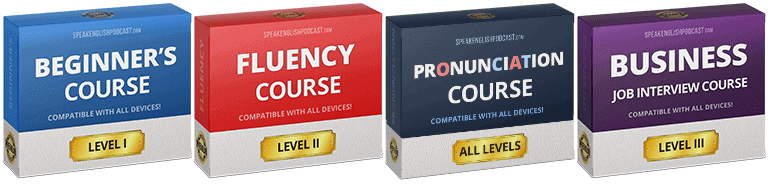
Continue practicing with my complete English courses. Choose the course that fits your level and goals, and learn to speak more naturally and confidently.
IMPROVE YOUR SPEAKING
Mini-Story: Speaking Practice
Answer the questions aloud with short and quick responses. Repeat the Mini-Story several times to improve your speaking and listening.
Many people want to learn English very fast.
Do many people want to learn slowly?
No. Many people don’t want to learn slowly. They want to learn fast.
What do people want to do quickly?
Learn English. People want to learn English very quickly.
Is it easy to learn English very fast?
No. It’s not easy. Learning English takes time.
Learning takes time, practice, and repetition.
Does learning take one day?
No. Learning doesn’t take just one day. It takes time, practice, and repetition.
What does learning take?
Time, practice, and repetition. Learning takes all three.
Some people feel bad because they make mistakes.
Do some people feel happy when they make mistakes?
No. They don’t feel happy. They feel bad.
Why do they feel bad?
Because they make mistakes. Some people feel bad when they make mistakes.
But mistakes are normal. Mistakes help you learn.
Are mistakes bad for learning?
No. Mistakes are not bad. Mistakes help you learn.
What helps you learn?
Mistakes. Making mistakes helps you learn.
Some students compare themselves to others.
Do some students compare themselves to others?
Yes. Some students do that.
Is it helpful to compare yourself to others?
No. It’s not helpful. Comparing yourself to others doesn’t help.
Everyone learns at their own speed.
Does everyone learn at the same speed?
No. Everyone learns at their own speed.
What does everyone have?
Their own speed. Everyone learns at their own speed.
You don’t have to be perfect to learn English. You can say: “I’m learning. I’ll try again tomorrow.”
Do you have to be perfect to learn English?
No. You don’t have to be perfect to learn English.
Can you say, “I’ll never learn”?
No! Don’t say that. Say, “I’m learning. I’ll try again tomorrow.”
What can you say instead?
“I’m learning. I’ll try again tomorrow.” That’s what you can say.
Being patient helps you grow.
What helps you grow?
Being patient. Patience helps you grow.
Does rushing help you grow?
No. Rushing doesn’t help. Being patient helps you grow.
Let me tell you about Mia.
Mia has been learning English for a few months. She studies every day. But Mia wants more. She wants to improve faster.
What does Mia want to do?
She wants to improve her English faster.
One day, Mia says: “I want to speak English fluently, so I’m going to Canada!”
What does Mia say?
She says she wants to go to Canada.
Why?
Because she believes it will help her become fluent faster.
Does Mia think going to Canada will help her learn?
Yes! She thinks it will help a lot.
So, Mia packs her suitcase and books a flight.
What does Mia do?
She packs her suitcase and books a flight to Canada.
Does she go by car?
No! She flies. She takes a long flight to Canada.
When Mia arrives in Canada, she feels excited — and cold!
How does she feel?
Excited… and cold! Canada is very cold!
Does Mia like cold weather?
Not really. She prefers warm weather.
But Mia says: “I’m here to learn English, so I’ll do my best.”
What does she say?
“I’m here to learn English, so I’ll do my best.”
The next day, Mia goes to a café and orders coffee in English.
Where does she go?
To a café.
Does she order tea?
No. No. She orders coffee! She orders coffee in English.
Is Mia confident?
Not really. She’s nervous, but she speaks anyway.
Why is she nervous?
Because she’s speaking English in a real conversation.
Does she make mistakes?
Yes, she makes a few mistakes.
Does she stop speaking?
No! She doesn’t stop. She keeps going.
What helps her improve?
Speaking, listening, and making mistakes every day.
After two weeks, Mia understands more English.
Is she fluent now?
Not yet, but she’s making great progress.
What does Mia learn in Canada? Skiing?
No, no! Mia doesn’t learn skiing. She learns that fluency takes time, practice, and patience.
What does Mia say now?
“I’m learning. I’ll try again tomorrow!”
Thanks for listening, and I’ll see you in the next episode.
Review
Vocabulary
Review the most useful words and expressions before listening again.
patient
able to wait and continue without becoming upset.
progress
gradual improvement toward a goal.
struggle
have difficulty doing or understanding something.
be hard on yourself
judge yourself too severely.
self-care
actions that protect your physical and emotional well-being.
respect your limits
accept how much you can reasonably do.
mindset shift
a change in the way you think about a situation.
part of the process
a normal stage in learning or development.
Continue practicing with my complete English courses. Choose the course that fits your level and goals, and learn to speak more naturally and confidently.