Episode 91
Listen to the Episode
Listen once for the main idea. Then use the transcript and repeat useful sentences aloud.
Download and study
Episode Resources
Download a file or continue to the transcript.
Best order: listen once, read while listening, then listen again without the text.
Full lesson
Read the Transcript
Follow the text while you listen, then repeat useful sentences aloud.
Welcome to Speak English Now Podcast. With your host Georgiana. The podcast that will help you to speak English fluently with no grammar and no textbooks.
Hi, everybody! I'm Georgiana, your online English teacher, and founder of SpeakEnglishPodcast.com
My mission is to help you to speak English fluently.
Today you’ll learn how to get your driver’s license in the United States. And you’ll practice your speaking with a conversation simulator that I often refer to as a mini-story. You’ll also find out some interesting facts about the legendary Formula 1 racing driver Michael Schumacher.
If you've never driven a car, you'll have to start with a learner's permit. You can take all the time you need before scheduling your appointment for the driving test. Before obtaining a driver's license, you must pass a written, driving, and vision test.
Ok! Let’s get started!
How do you get a Learner's Permit?
You'll have to read the driver's manual. And you will be required to take a written test based on your knowledge and understanding of the rules and regulations described in the driver's manual.
If you're under the age of 18, most states require you to get a learner's permit and hold it for about six months to a year before you can get a full license.
Also, to get a learner's permit, you must show legal documents to verify who you are and where you live.
Before you can take the written test and get your permit, you'll have to pay a fee. The amount of the fee is usually under $100.
You will need to take a basic knowledge test based on the traffic rules and regulations discussed in the driver's manual before obtaining the learner's permit.
The learner's permit test typically focuses on your knowledge of signs and basic traffic rules such as using your turn signal and passing on the left.
To operate a motor vehicle, you must be able to see. If you cannot pass the eye exam, you must obtain eyeglasses or contact lenses to correct your vision before you are allowed to get your learner's permit.
Once you have passed the written and vision tests and your documents are in order, an examiner will issue you your new learner's permit.
Be careful so that the learner's permit does not expire. If you're still not ready for the full license, you can renew it.
This way, you will have more time before obtaining a full license.
Your next step is to take a driver's education course. If you are a high school student, you can take a driver education class through your school for free or at a reduced price compared to private driving classes.
If you're an adult, and you've never driven a car before, you should take formal driving lessons. Even if you are already licensed in another country, driving lessons can help you practice U.S. driving laws that may be different from those in your country of origin.
And now it's time to practice.
Ideally, you want to ask someone who is patient and has been driving for a long time. I remember that my best friend was kind enough to show me how to drive a car. She let me drive her car every Sunday morning, and I'm still grateful for that.
Cuz driving with the DMV examiner usually makes you nervous, so you want to be comfortable behind the wheel.
By the way, DMV in American English is short for Department (or Division) of Motor Vehicles.
Even if you passed a written test already to get a learner's permit, you'll probably still have to take a written test to get your full license. This written test is longer and more in-depth than the test you took to get a learner's permit.
Use practice written tests. Most states provide practice tests that you can use to study for the written driver's license test. You can find practice tests in the back of the handbook, or you can download them directly from your state's DMV website.
You’re almost ready! So now just go ahead and…
Schedule an appointment for your driving test.
Find out if you are expected to bring your own car or if you'll take the test on a DMV vehicle.
After you take the written test, you’re finally ready to take your driving test.
When you go to the DMV for your appointment, an examiner will observe your driving. Expect to drive on public streets or a closed course.
Although you're going to be pretty nervous, pay attention. The examiner will be watching you. So make sure you obey all traffic rules.
At the end of your driving test, the examiner will tell you the result of your driving test.
And that’s it! Enjoy your new car but make sure you don’t run anyone over. 🙂
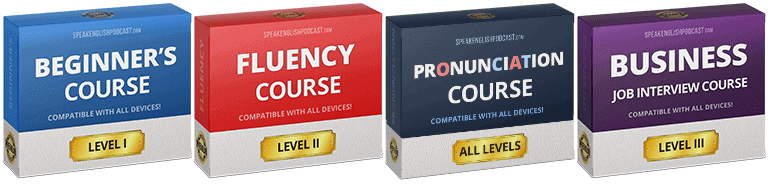
Continue practicing with my complete English courses. Choose the course that fits your level and goals, and learn to speak more naturally and confidently.
IMPROVE YOUR SPEAKING
Mini-Story: Speaking Practice
Answer the questions aloud with short and quick responses. Repeat the Mini-Story several times to improve your speaking and listening.
Michael Schumacher got his driver's license when he was a minor.
What did Michael Schumacher get?
Did he get his driver’s license?
Yes. Michael Schumacher got his driver’s license.
What did Michael get?
Did he get a bike?
No. No. Michael didn’t get a bike. He got his driver’s license.
Was he 20 years old when he got his driver’s license?
No. No. He wasn’t 20 years old. He was a minor when he got his driver’s license.
Who got his driver’s license?
Ralf Schumacher?
No. No. Not Ralf Schumacher. Michael Schumacher got his driver’s license.
In his first race, Michael Schumacher ran off track, and in the following two, was involved in collisions.
Did he run off track?
Yes. He ran off the track.
When did he run off track?
In the second race?
No. No. He didn’t run off the track in the second race.
Was he involved in collisions?
Yes. He was involved in collisions. In the following two races, he was involved in collisions.
His younger brother, Ralf, was also a racing driver.
Is Ralf Michael’s cousin?
No. No. Ralf isn’t Michael’s cousin. Ralf is Michael’s brother.
Ralf was a Formula 1 racing mechanic. Right?
No. No. Ralf wasn't a Formula 1 racing mechanic. Just like his brother Ralf was also a racing driver.
Who was also a racing driver?
Michael’s brother?
Yes. Michael’s brother Ralf was also a Formula 1 racing driver.
In the year 2006, Michael was voted as the most famous Formula 1 racing driver.
What happened in 2006?
Was it an important year for Michael?
Yes. The year 2006 was an important year for Michael.
Was he voted as the most notorious Formula 1 racing driver?
No. No. Michael wasn’t voted as the most notorious Formula 1 driver.
Was he voted as the most famous Formula 1 racing driver in 2007?
No. No. He wasn’t voted as the most famous Formula 1 racing driver in 2007. He was voted as the most famous Formula 1 racing driver in 2006.
After his retirement in 2006, he continued to work with Ferrari as a Consultant.
Schumacher continued working with McLaren after his retirement?
Right?
No. No. Schumacher continued working with Ferrari after his retirement. Not with McLaren.
Did Schumacher retire?
Yes. Schumacher retired.
When did Schumacher retire?
Did he retire in 2006?
Yes. Schumacher retired in 2006.
His son Mick Schumacher got on a Ferrari for the first time in April 2019.
Is Mick Schumacher his brother?
No. Mick Schumacher is Michael’s son. His brother’s name is Ralf.
What’s his son’s name?
Mick Schumacher. His son’s name is Mick Schumacher.
Did Mick get on Red Bull Racing for the first time in April 2019?
No. No. Mick Schumacher didn’t get on Red Bull Racing in April 2019. He got on a Ferrari for the first time in April 2019.
By the way, you probably noticed that I pronounced Michael Schumacher in German. However, his name Michael is pronounced "Michael" in English. Just so you know.
Thanks for listening, and I’ll see you in the next episode.
Review
Vocabulary
Review the most useful words and expressions before listening again.
Learner's permit
A temporary permit that allows a new driver to practice before getting a full license.
Driver's manual
A handbook explaining traffic rules and driving regulations.
Vision test
An eye exam used to check whether you can see well enough to drive.
Turn signal
A flashing light used to show that a vehicle is going to turn.
Expire
To stop being valid after a certain date.
Renew
To extend the period during which a permit or license remains valid.
DMV
Department or Division of Motor Vehicles, the U.S. agency that handles licenses and vehicle matters.
Behind the wheel
In the driver's seat and controlling a vehicle.
Continue practicing with my complete English courses. Choose the course that fits your level and goals, and learn to speak more naturally and confidently.